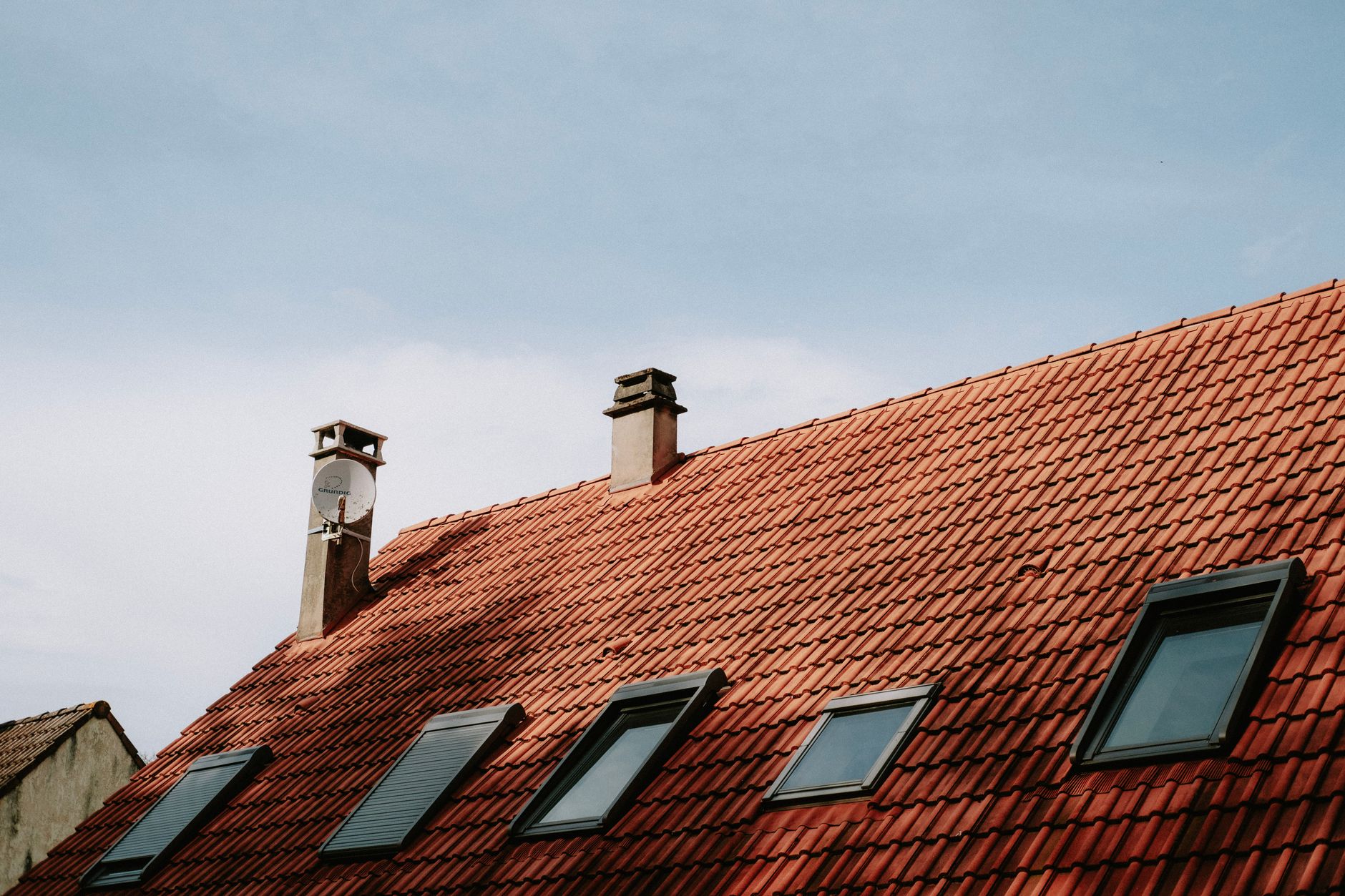
"The living room smells like an old campfire"
Owners say it in different ways. "There is a cold breeze coming out of the fireplace." "It smells like an ashtray in there when the heater is on." "We have not lit it in months and the room still stinks of smoke." All three describe the same thing running in reverse: air moving down the chimney into the house instead of up and out. In Yorba Linda it shows up most in the warm months and on blustery days, and it nearly always has a fixable cause.
Why a chimney runs backwards
When there is no fire, nothing is heating the column of air inside the chimney. If the house is pulling air from somewhere, through a range hood, a dryer, bathroom fans or simply warm air leaking out upstairs, the cold, heavy air in the chimney is an easy source. It drops into the room and brings the smell of old soot and creosote with it. Wind adds to it. A gust across an open flue top, or a chimney sitting lower than a nearby roof ridge, can push air straight down.
Moisture makes the smell worse. Creosote is fairly quiet when dry, but damp creosote smells strongly. A chimney that lets rain in through a missing cap, a cracked crown or loose flashing will smell worst after a wet spell, then again on the first hot day.
The parts that stop it
Four pieces of a chimney decide whether outside air and water can get in:
- The damper. The metal plate just above the firebox. When it is warped, rusted or stuck partly open, it cannot seal. Older throat dampers in tract homes from the 1970s and 1980s often fit loosely after decades of heat.
- The cap. It covers the flue opening against wind and rain. A missing, bent or rusted-out cap leaves the flue open to both.
- The crown. The concrete slab across the top of a masonry chimney. Cracks let water into the brick and the flue, which feeds the smell.
- The chase cover. On a factory-built fireplace, the metal lid on top of the framed chase. Once it rusts through, rain runs inside.
A missing cricket, the small ridge that sends water around the uphill side of a wide chimney, can also let water sit against the brick and leak in at the flashing.
Prices for the usual fixes
| Repair | When it is the answer | Price |
|---|---|---|
| Water entry traced and stopped | Smell worst after rain, stains near the chimney | $535 to $3,200 |
| Cricket added on the uphill side | Wide chimney with water pooling behind it | $425 to $965 |
| Cricket and new flashing together | Pooling water plus worn flashing | $640 to $1,600 |
| Sweep to remove the smelly deposits | Heavy creosote holding the odour | from $400 |
| Damper, crown or chase cover work | Seal failed, crown cracked, lid rusted | Written figure after we measure |
| Cap fitted to the flue | Open or rusted top, wind and rain getting in | quoted after we measure |
Leak repairs range widely because one source, such as a cracked crown, is a short job, while water coming in at the crown, the flashing and the brick all at once is a much larger one. Caps differ because chimneys differ: one narrow flue gets an off-the-shelf stainless top, while a big stack with several flues needs a cap built to fit.
Top-sealing dampers
A popular fix for a loose throat damper is a damper that seals at the top of the chimney instead. It is a hinged lid held shut against a gasket and opened by a cable from the firebox. Shut, it blocks the backward flow, and birds and rain stay outside too. Whether it fits your chimney depends on the shape and size of the flue top and the crown, which is why it gets a written figure from the visit rather than a standard price.
What decides your next step
If the smell comes and goes with the weather, water is part of the problem and the visit looks at the cap, crown and flashing. If it is constant and the room feels cold near the hearth, the damper is the first suspect. Ask for a downdraft visit and tell us when the smell is worst, whether the fireplace burns wood or gas, and whether the house has had recent work such as new windows or a new range hood.
When it is not the chimney alone
A strong exhaust fan can pull air down even a well-sealed chimney. If the smell starts the moment the kitchen hood runs, the house needs a source of replacement air, and the report says so. That is cheaper than chasing the chimney.
Gas fireplaces get downdraft too
A sealed gas unit should not let air or smell in, but a vented log set in an old masonry fireplace can, because its damper is clamped partly open by design. A cap and a good top-sealing damper that clears the clamp, or a sealed insert, solve it. A sealed gas insert in the existing fireplace runs $2,650 to $5,350.
For more detail see chimney damper repair, chimney cap installation, chimney crown repair and chimney leak repair. If the fireplace also smokes when lit, our smoke repair cost guide covers that.
Ending the smell
Start on the contact page. Tell us where in the room you notice the draft or the odour, and we will plan the visit around it.
Want the Cause Found at Your Own Hearth?
Upton Chimney Solutions works from Yorba Linda on fireplaces that smoke, smell or will not stay lit. Describe yours on the contact page and we come out, watch it burn and put the cause and price in writing.