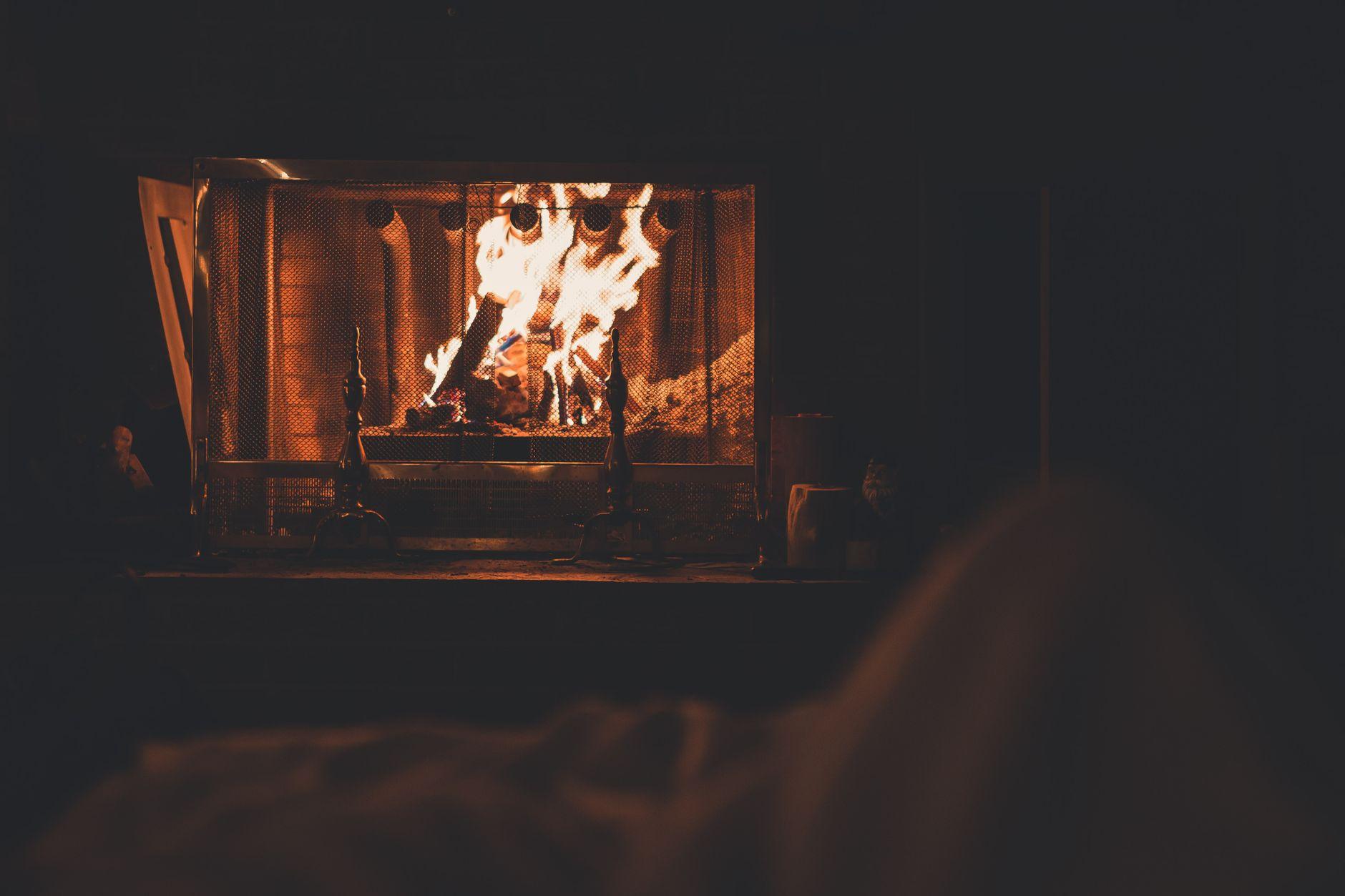
"It puffs smoke every time I light it"
That sentence opens a large share of the calls Upton Chimney Solutions takes. A fire catches, a grey haze gathers under the lintel, and the hallway alarm goes off before the logs are properly going. Owners in Yorba Linda tend to describe one of three patterns: smoke that spills for the first few minutes and then settles, smoke that spills all evening, or a sour, campfire smell drifting out of a cold fireplace on warm afternoons.
Each pattern has its own likely cause, and the cause sets the bill. Below is what we usually find, what we do about it, and the figure wherever we publish one.
Why a fireplace stops pulling
A chimney works because hot gas weighs less than the cooler air in the room. The warm column rises, drags fresh air in across the fire and carries the smoke up with it. Anything that weakens that rising column, narrows its path or fights it with outside air ends up as smoke in your living room. In practice the causes fall into four groups:
- Something in the way. Thick soot or creosote, a nest, fallen mortar on the smoke shelf, or a damper plate that only swings part way open.
- A mismatch in size. An opening too big for the flue, or a flue too short for the roof around it. An addition that raised the roofline can do this to a chimney that behaved for decades.
- A house that is too tight. New windows, a strong range hood and bathroom fans all pull air out. When the fireplace has to compete for replacement air, it loses.
- Wind and the roof. A taller ridge next door, a big tree or an east wind gusting across the top can push air back down.
What the first visit costs
We start with the cheapest answer that could solve it. A sweep, from $400, clears the flue and the smoke shelf and puts our hands on the damper and liner. When buildup or a nest is the cause, the sweep is often the whole repair.
If the flue is clear and the fireplace still spills, the next tool is a camera. A Level 2 inspection, at $375, records the inside of the flue from the firebox to the top, so we can see a slipped tile, a sharp offset, a blockage high up or a liner that was never there. Owners who want an opinion before spending more can start with a Level 1 look at $160.
The usual fixes, priced where we can
| Cause we find | What we do about it | Price |
|---|---|---|
| Soot, creosote or a nest | Sweep plus a hand-cleared smoke shelf | from $400 |
| Draft still poor after sweeping | Video of the flue and a written report | $375 |
| Damper stuck, warped or half open | Repair, or a damper that seals at the top | Written figure from the visit |
| Opening too big for the flue | Smoke guard, raised hearth or smaller firebox | Written figure from the visit |
| Flue too short or damaged | Extension, relining or partial rebuild | Written figure from the visit |
| Open fireplace that never drew | A sealed gas insert in the old opening | $2,650 to $5,350 |
| Wind forcing air down an open top | A new cap matched to the flue | quoted after we measure |
Caps differ because chimneys differ. A single round flue takes a small stainless cap. A broad chimney carrying two or three flues needs a custom top that covers them all, and that costs far more. Each cap is quoted after we measure.
What decides your price
Three things move a smoke repair more than anything else: whether we find one fault or several, how easy the roof is to work on, and whether the fix happens at the top of the chimney or down in the firebox. A single-storey tract home with one flue is a simpler job than a house on a slope in the east end of town where the chimney climbs from a lower floor.
Tell us when the smoke shows up, what you burn and whether the fireplace has always behaved this way or turned bad lately. Request a smoke visit through the form and we will say which first step suits it, the sweep or the camera.
Smoke you see, gas you do not
Visible smoke is the warning you get. Carbon monoxide is the one you do not. A fireplace that spills smoke is spilling CO with it, and a gas fireplace with a blocked vent can do the same with no smoke at all. If anyone at home gets headaches, drowsiness or nausea that ease once they step outside, stop using the fireplace and air the house out. Our written notes say whether the fireplace room and the bedrooms nearby have a working alarm, because that is part of a smoke complaint too.
Cures that only move the problem
Some fixes people reach for first treat the symptom. Cracking a window helps a starved fire for that evening, but the cause is still there next time. A tall decorative cap bought online can make a short flue draw worse if its screen is fine enough to clog with soot. Damp wood makes a cool, smoky fire that coats the flue faster, which brings the original problem back sooner. We would rather find out which of the four groups your fireplace sits in and fix that.
When an insert is the better spend
Some open fireplaces never drew well, even when the house was new. The opening is wide, the flue is modest and no amount of sweeping changes that ratio. For those, a sealed gas insert ends the argument: the flame sits behind glass, air and exhaust run through their own liner, and the room never sees smoke again. Installed, that work runs $2,650 to $5,350, depending on the unit and how much liner the chimney needs. We put that number on the same page as the repair figure so you can compare.
More on fireplace repair, the chimney sweep and fireplace inserts.
Getting it looked at
A visit starts from the contact page. Put the haze, the smell or the alarm in your own words, and we will take it from there.
Want the Cause Found at Your Own Hearth?
Upton Chimney Solutions works from Yorba Linda on fireplaces that smoke, smell or will not stay lit. Describe yours on the contact page and we come out, watch it burn and put the cause and price in writing.